She cried the day she surrendered her driving licence. Not because she hadn't seen it coming, she had, for years, one kerb at a time. But because it made something official.
Sheila Irvine, then in her mid-fifties, was losing the centre of her world.
Advanced age-related macular degeneration doesn't take everything. It takes the part you use most. Reading. Recognising faces. Scanning a prescription label at the pharmacy. Sheila had been an avid reader all her life. She gave that up, too.
"I don't let anything stop me," she told interviewers later. She didn't, either. She kept her friends, kept her independence, kept going down the pub. She adapted. But she stopped reading.
In 2025, Sheila became one of 38 patients in a multi-country trial to receive the PRIMA retinal implant at Moorfields Eye Hospital in London. The device is a 2mm × 2mm microchip, thinner than a human hair, placed surgically under the retina. It converts light from special glasses into electrical signals, bypassing damaged cells and communicating directly with the healthy ones that remain.
During follow-up testing, Sheila read an eye chart without a single mistake.
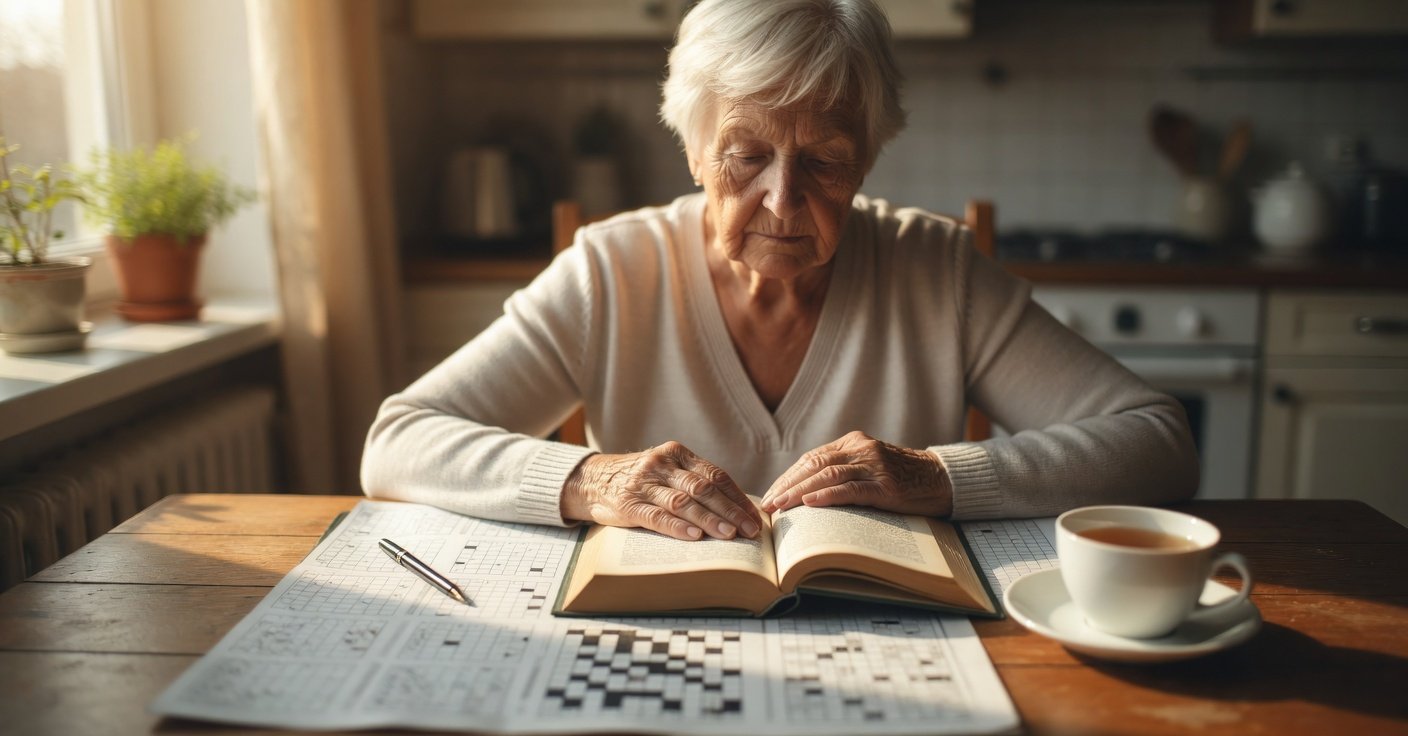
She picked up a book. She did crosswords. When a word lit up in front of her for the first time in over a decade, she punched the air. "I haven't seen letters for so long," she said. "It was out of this world."
More than 80% of participants in the PRIMA trial regained enough functional central vision to read, on average, five additional lines on a standard sight chart. Sheila was one of them.
She'd volunteered for the trial not just for herself. "I wanted to take part in research to help people in the future." Her optician had suggested Moorfields. She didn't hesitate.
There's a moment in this story that I keep coming back to. Not the air punch, though that's wonderful. It's the crossword. The one she stopped doing fifteen years ago and quietly picked up again, probably without making a fuss about it, because that's who she is.
That's what this technology actually gives back. Not sight in the abstract. The crossword on a Saturday morning.