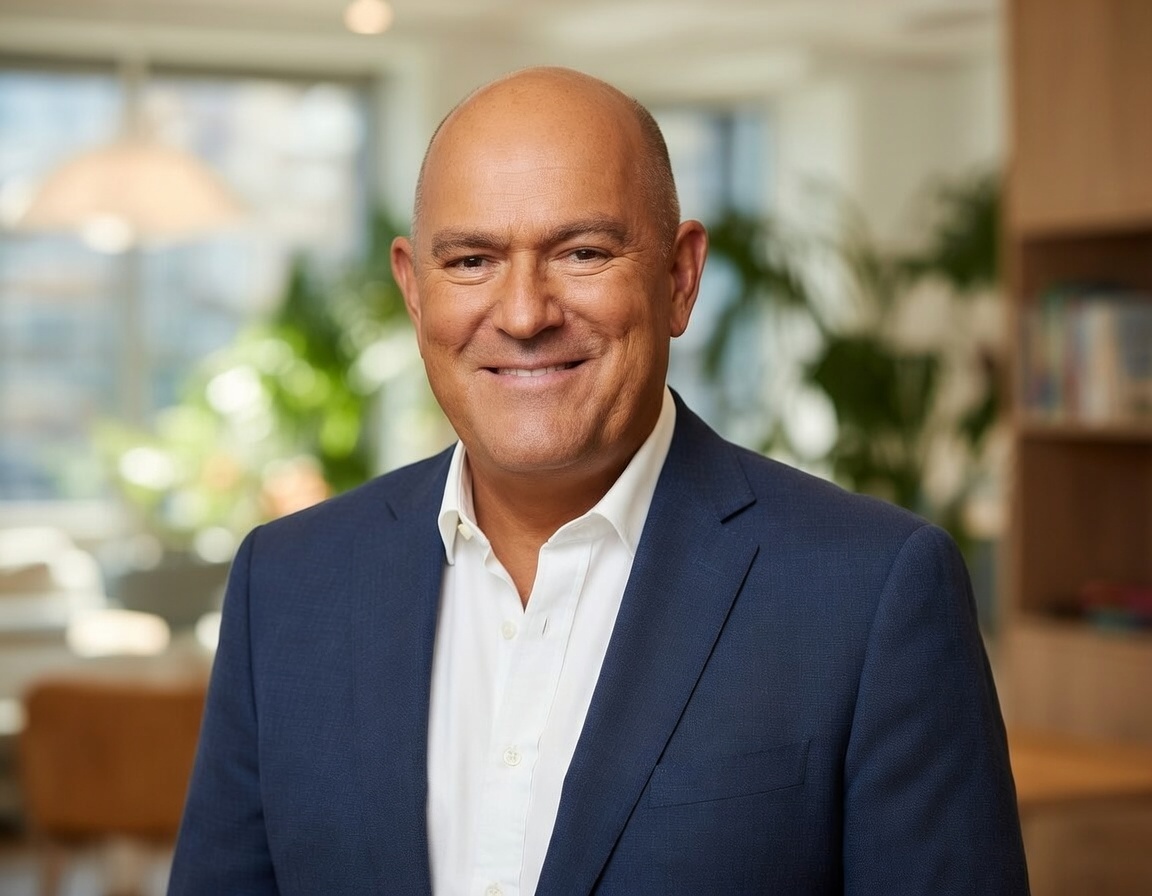
The Leap

Two puppies, one company, one year.

In 2019 I left a career in energy recruitment: twenty years, twenty-eight countries, some genuinely extraordinary projects. I founded Innotech Recruit. I also bought two puppies from the same litter that year. I am still not sure which decision required more nerve.

The name reflects the focus: innovation and technology in medical device. I began where the stakes are highest, supporting startups from their first commercial hire onward. That early immersion taught me something that shapes every search I run today: developing a medical device is extraordinarily hard, and bringing one to market commercially is harder still. The leaders who do it well are a specific kind of person. Identifying them requires more than a CV review and an interview.

What Working With Me Looks Like

Every search starts with a conversation I take seriously.

Not a credentials presentation. A genuine attempt to understand the commercial stage your business is actually at, the specific challenge the hire needs to solve, and the team dynamic the person is joining.

From that conversation I build the brief that shapes everything: the market mapping, the behavioural benchmark, the competency questions the candidates will answer before they meet you. The brief is the work. A weak brief produces a weak shortlist regardless of how well the search is executed.

"Blair always provides the level of service and attention to detail that you expect for a senior appointment, but all too rarely receive."
Graeme Cameron, CEO, Pennine Healthcare
"When we got a CV from Blair we just interviewed."
Darren Garside, Commercial Director, UK/EU

That is the standard I hold every search to.

A Transformation Assignment

A service division that needed rebuilding, not managing.

A UK medical device company asked me to find a Head of Service for a fifty-person service division that was, by any internal measure, in serious difficulty. High attrition. Low morale. No service management software. No spares management. No vision for the staff to get behind. SLAs that the commercial organisation was undermining. A field workforce operating without accountability or a coherent operating model.

The instinct in that situation is to hire a strong operator. It is the wrong instinct. A broken service organisation does not need someone to manage what exists. It needs someone to rebuild the operating system, confront the commercial organisation where it has overreached, and hold a field workforce to a standard that has not existed before. Those are different people. They interview differently, they read differently on a CV, and they have fundamentally different behavioural profiles.

The candidate turned the division around in twelve months. Within twenty-four it was a business enabler, not a cost centre. Over the two years that followed he repeated the process across three more business units. The hire paid for itself not once but repeatedly.

"Blair's ability to quickly understand my fit with the organisation and where my past experience and skills would complement the challenges of the role was second to none."
Head of Service, UK medical device company
On Confidentiality

The hire itself is the signal.

On several occasions I have been asked to sign a non-disclosure agreement before a client shares the full brief. In a number of those processes, every candidate signed one too.

I mention this not as a credential but as context. The work at this level involves information that is genuinely sensitive: restructures that are not yet public, acquisitions in preparation, commercial situations the board has not yet disclosed. The companies that engage Innotech are not hiring quietly because they are disorganised. They are hiring quietly because the hire itself is the signal.

Discretion at that level is not a service feature. It is the baseline expectation. It is also why no transformation case study on this site names the company involved. The clients who have been through those processes know who they are. That is enough.

What I Will Not Do

I only take assignments where I am confident I can deliver.

A few months ago I took a call from the CEO of a US interventional cardiology company. Commercial Director, US market, 40 percent growth target, team of 25 reps. Exactly the kind of assignment I exist for.

Then came the compensation details. Base at 180k, OTE at 280k. The profile he was describing: a battle-tested Commercial Director with a verifiable history of hitting aggressive growth targets in interventional devices, was landing between 340k and 420k in the current market. I had placed a comparable role three months earlier at 220k base, 375k OTE.

I told him directly. The package would attract either desperate candidates or underperformers who could not get better offers elsewhere. Neither outcome served him, the eventual hire, or my firm. I declined the assignment and offered to share market benchmarking data instead.

He was not happy. He respected the candour.

I only take assignments where I am confident I can deliver a result that reflects well on everyone involved. When I cannot, I say so immediately and point toward someone better placed to help. That is not a positioning claim. It is how retained search has to work if the 96 percent retention figure is going to mean anything.

If you are wondering whether your brief is one I can genuinely help with, the fastest way to find out is a thirty-minute call. I will tell you within the first ten minutes.

Book a Call